A loyalty program is a structured system used by a brand to reward, recognize, and retain recurring customers through incentives, benefits, and personalized communication based on transactional data. Its purpose is to increase visit frequency, average ticket size, and customer retention, while converting loyal customers into Brand Ambassadors who advocate for the business.
For multi-location chains in QSR, retail, and food service, a loyalty program is no longer a promotional tactic — it is the infrastructure that turns first-party customer data into predictable revenue growth.
Why loyalty programs matter more than ever for multi-unit brands
Acquiring a new customer costs anywhere from 5 to 25 times more than retaining an existing one, according to Harvard Business Review. For VPs of marketing managing chains across the US and LATAM, that gap translates directly into budget pressure every quarter when customer acquisition costs outpace organic growth.
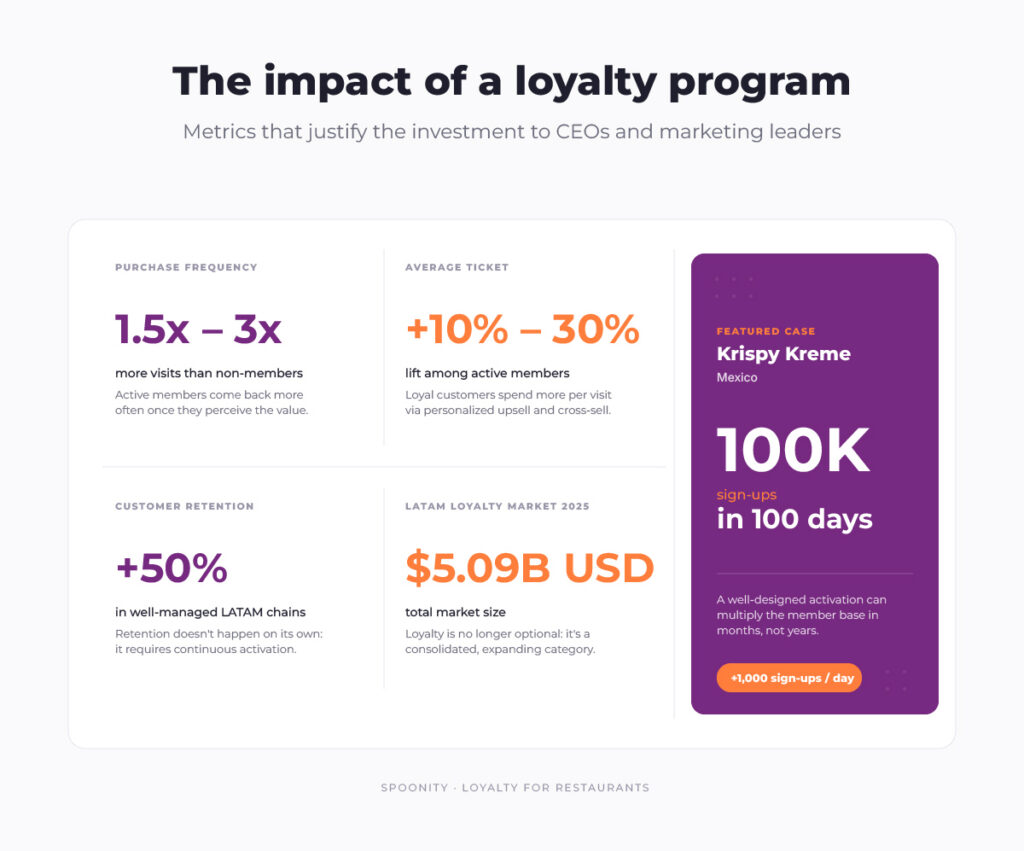
The Latin American loyalty market alone is projected to reach $5.09 billion in 2025, growing at a compound annual rate of 19.2%. North American and LATAM chains that haven’t built a loyalty infrastructure are not just missing a revenue lever — they’re ceding first-party data to competitors who have.
A well-designed loyalty program answers three operational questions that every multi-unit brand needs to resolve:
Who are your best customers actually? Not the top spenders once, but the repeat visitors.
What drives them to return? Points, discounts, experiences, recognition.
How do you turn them into advocates without scaling paid acquisition spend?
The answer doesn’t come from intuition — it comes from transactional data pulled directly from the point-of-sale (POS) and activated through personalized campaigns across channels.
Key data pointAccording to Sprout Social research, 85% of consumers would stick with a brand during a crisis if it has a history of transparency. A loyalty program isn’t just a revenue channel — it’s stability insurance for your business.
How a loyalty program works, step by step
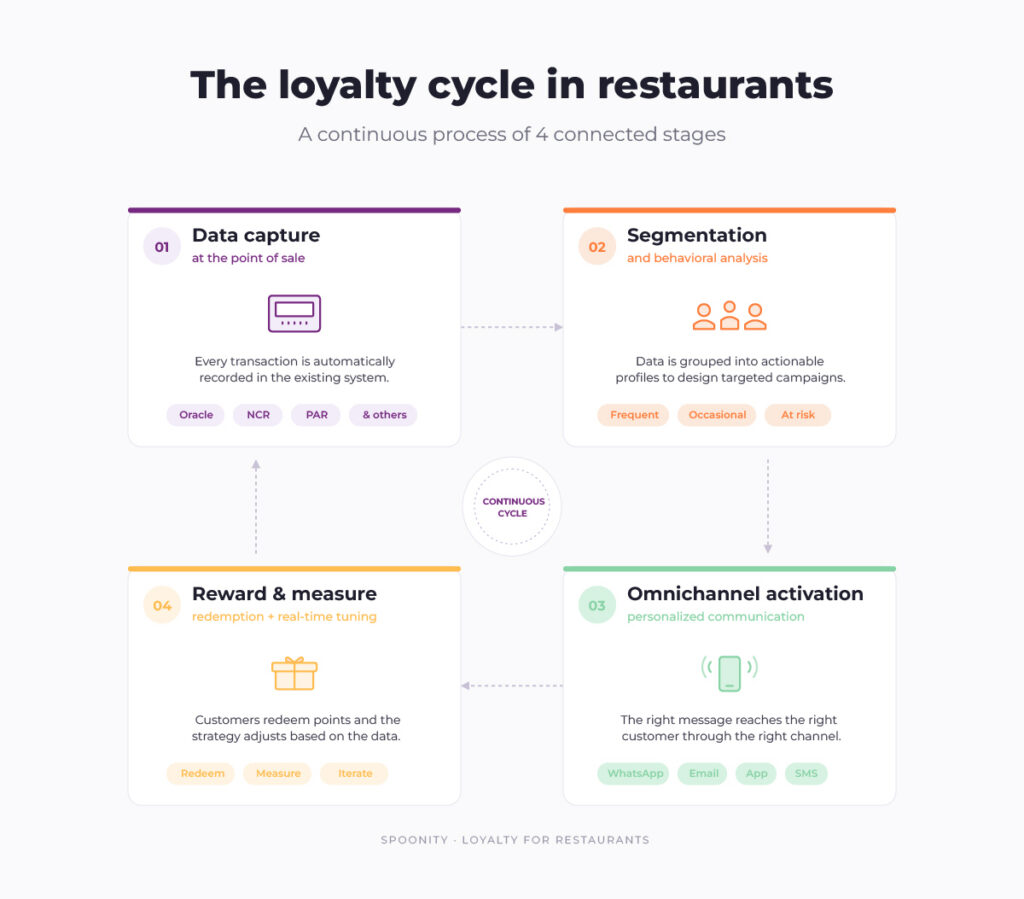
Every modern loyalty program — whether points-based, tiered, cashback, or experiential — follows the same operational logic. These are the four pillars every marketing director should know before evaluating a platform:
1. Data capture at the point of sale
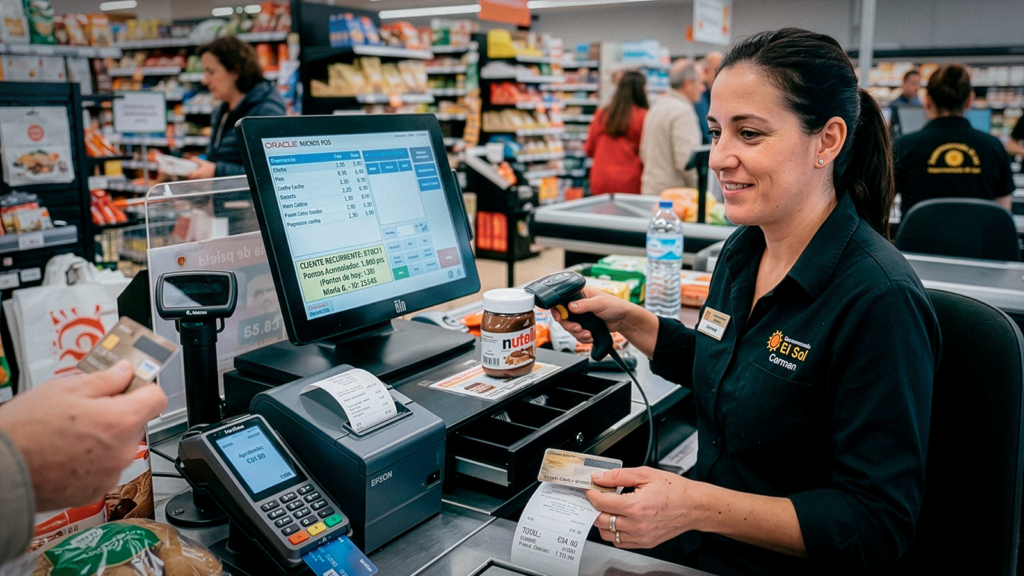
The program connects to the POS (Oracle, NCR Aloha, PAR PixelPoint, etc.) through POS integrations and logs every transaction: what the customer bought, when, at which location, and for how much. Without this transactional foundation, any strategy becomes guesswork.
2. Segmentation and analysis
The data is cross-referenced to identify patterns: frequent vs. occasional customers, at-risk accounts, high-ticket spenders, location preferences. This segmentation enables differentiated action — not blanket promotions that dilute margin.
3. Omnichannel activation
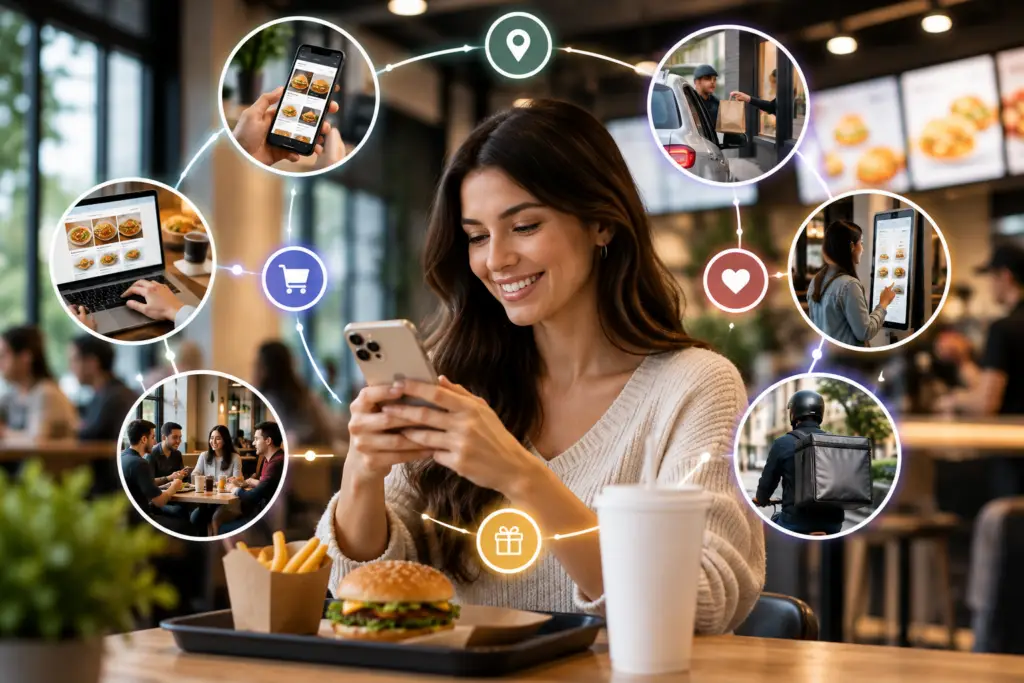
Customers receive personalized communication through the channels they actually use: WhatsApp Business, email, mobile app, SMS, or push notifications. Every message responds to real behavior — not a generic campaign calendar.
4. Reward and measurement
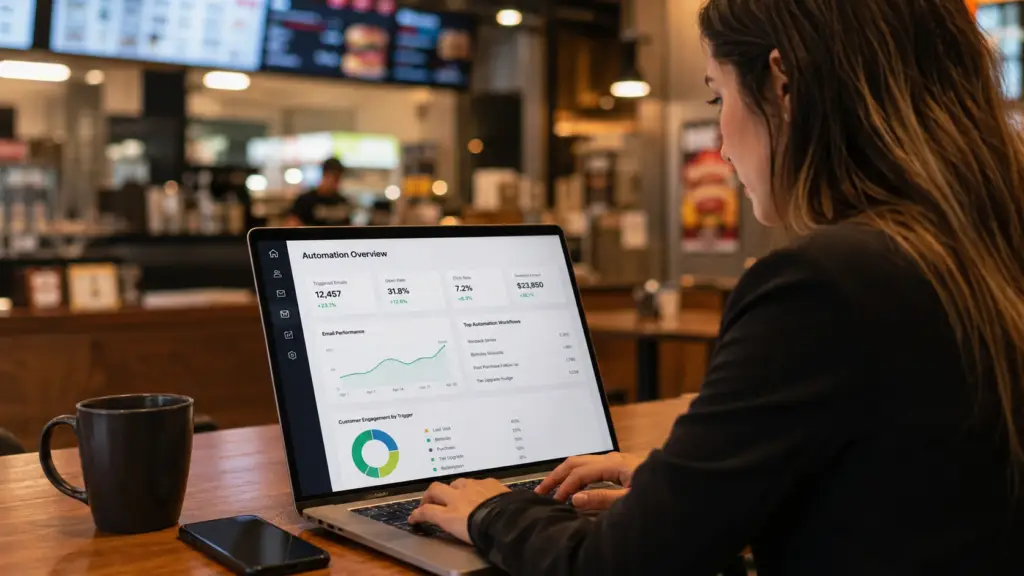
Customers redeem points, unlock exclusive benefits, or receive personalized offers. Every interaction is measured in real time to adjust strategy: which promotion works, which doesn’t, and how much each adjustment lifts visit frequency.
Types of loyalty programs: which model fits your chain
Not every program structure works equally well for every business. These are the most common models deployed by QSR, retail, and food-service chains across the US and LATAM:
Type
How it works
Best for
Points-based
Customers earn points on every purchase and redeem them for products or discounts.
Cafés, QSR, retail with high-frequency purchases.
Tiered
Customers move up through levels (Silver, Gold, Platinum) and unlock richer benefits.
Combines multiple models with challenges, badges, and surprise rewards.
High-frequency brands with younger customer base (QSR, cafés).
Model selection depends on three factors: typical purchase frequency, average ticket size, and operational digital maturity. A points program doesn’t deliver the same ROI in a coffee chain (high frequency) as it does in an auto dealership (low frequency, high ticket).
Measurable benefits of a loyalty program for your chain
Beyond brand narrative, a well-executed loyalty program delivers concrete numbers. These are the KPIs to expect when evaluating ROI:
Higher visit frequency: enrolled customers visit 1.5x to 3x more often than non-members.
Higher average ticket: active members tend to spend 10% to 30% more per transaction.
Stronger customer retention: well-managed programs in LATAM and North America routinely report retention rates above 50%.
First-party data ownership: in a post-cookie world with tightening privacy regulation, owning your customer data base is a strategic asset.
Krispy Kreme Mexico deployed a digital loyalty program and reached 100,000 registrations in 100 days, converting store traffic into an activatable customer database for personalized promotions and seasonal campaigns.
Common mistakes when launching a loyalty program (and how to avoid them)
The difference between a program that drives revenue and one that gets quietly shelved isn’t technology — it’s strategy. These are the most frequent failure modes we see across North American and LATAM chains:
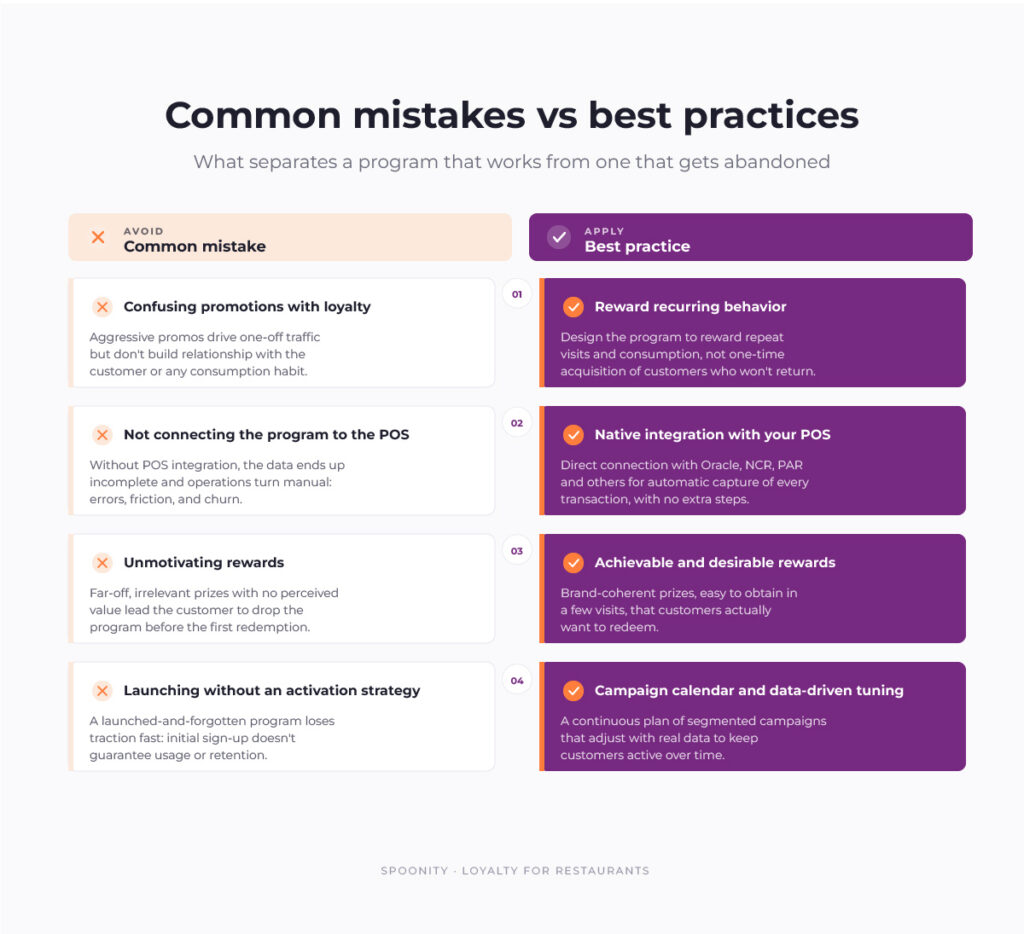
Confusing promotions with loyalty
A recurring BOGO isn’t a loyalty program — it’s a discount. Loyalty rewards repeat behavior; promotions attract any opportunistic buyer. Both can coexist, but they are not the same tool and shouldn’t share the same budget line.
Not connecting the program to the POS
If your program lives in an isolated app with no POS integration, you lose the most valuable signal: what the customer actually bought. Without transactional data, personalization is impossible and your insights are limited to self-reported behavior.
Designing rewards that don’t move the needle
Points that take months to redeem, benefits too small to notice, or a catalog disconnected from customer preferences kill engagement. Rewards must be attainable, desirable, and consistent with the brand’s value proposition.
Launching without a continuous activation strategy
A loyalty program isn’t launched — it’s operated. Without a campaign calendar, active segmentation, and data-driven iteration, even the best initial design becomes irrelevant within months.
Frequently asked questions about loyalty programs
What’s the difference between a loyalty program and a rewards program?
The terms are used interchangeably in most markets, but there’s a strategic distinction. A rewards program typically focuses on the transactional side — earn points, redeem for a benefit. A loyalty program is broader: it includes rewards but also personalized communication, tiered recognition, exclusive experiences, and data-driven segmentation. In practice, most modern loyalty programs include a rewards component as one of several mechanics.
How much does it cost to implement a loyalty program?
Investment varies based on chain size, number of locations, POS integration complexity, and reward model. Professional platforms are typically priced as a monthly license plus an initial setup fee. ROI is measured through lift in visit frequency, ticket size, and retention rate — not operational cost alone. For multi-unit brands with 10+ locations, payback periods of 6 to 12 months are common.
Which businesses need a loyalty program?
Any business with repeat customers benefits from a loyalty program. The highest-impact cases are QSR chains, cafés, full-service restaurants, retail, gas stations, gyms, and any multi-location brand with at least 10 locations or a recurring customer base. In low-frequency businesses (like auto dealerships), loyalty works better as a referral engine than as a traditional points system.
How is the success of a loyalty program measured?
Key indicators include: enrollment rate of new customers, active member percentage (users who engage at least once per month), lift in visit frequency and ticket size between members and non-members, retention rate, and ROI of personalized campaigns. A healthy program shows steady growth in these indicators during the first 6 to 12 months.
Can you run a loyalty program without a dedicated mobile app?
Yes. While mobile apps are a common choice, many chains across the US and LATAM run successful programs through WhatsApp Business, digital cards in mobile wallets, QR codes at the POS, or social media integrations. The platform matters less than the connection between transactional data and personalized customer communication.
How long does a loyalty program take to produce results?
Initial adoption indicators (enrollments, first activity) appear within 4 to 8 weeks of launch. Measurable lift in visit frequency and ticket size typically emerges between months 3 and 6. Long-term effects on retention and customer lifetime value consolidate from month 12 onward, provided a continuous activation strategy is in place.
How to get started: next steps for your chain
A loyalty program is no longer an optional project for chains that want to grow in competitive QSR and retail markets — it’s the strategic foundation on which every modern marketing, retention, and growth plan is built. The distance between the brands leading their categories and the ones fighting for share increasingly comes down to the quality of their relationship with existing customers.
If your chain operates 10+ locations, runs on an integrable POS, and has a clear growth target, now is the time to evaluate a professional loyalty platform. Spoonity designs fully personalized loyalty strategies for restaurant, QSR, and retail brands operating across North America and LATAM, with native integrations into the major POS systems in the market.